
Every Asset Has a Best Use. Portfolio Optimization Finds It
Arcobi positions generation fleets, BESS, gas facilities, and flexible load portfolios against the highest-value market opportunities available - dynamically updated as prices, demand, and grid conditions shift.
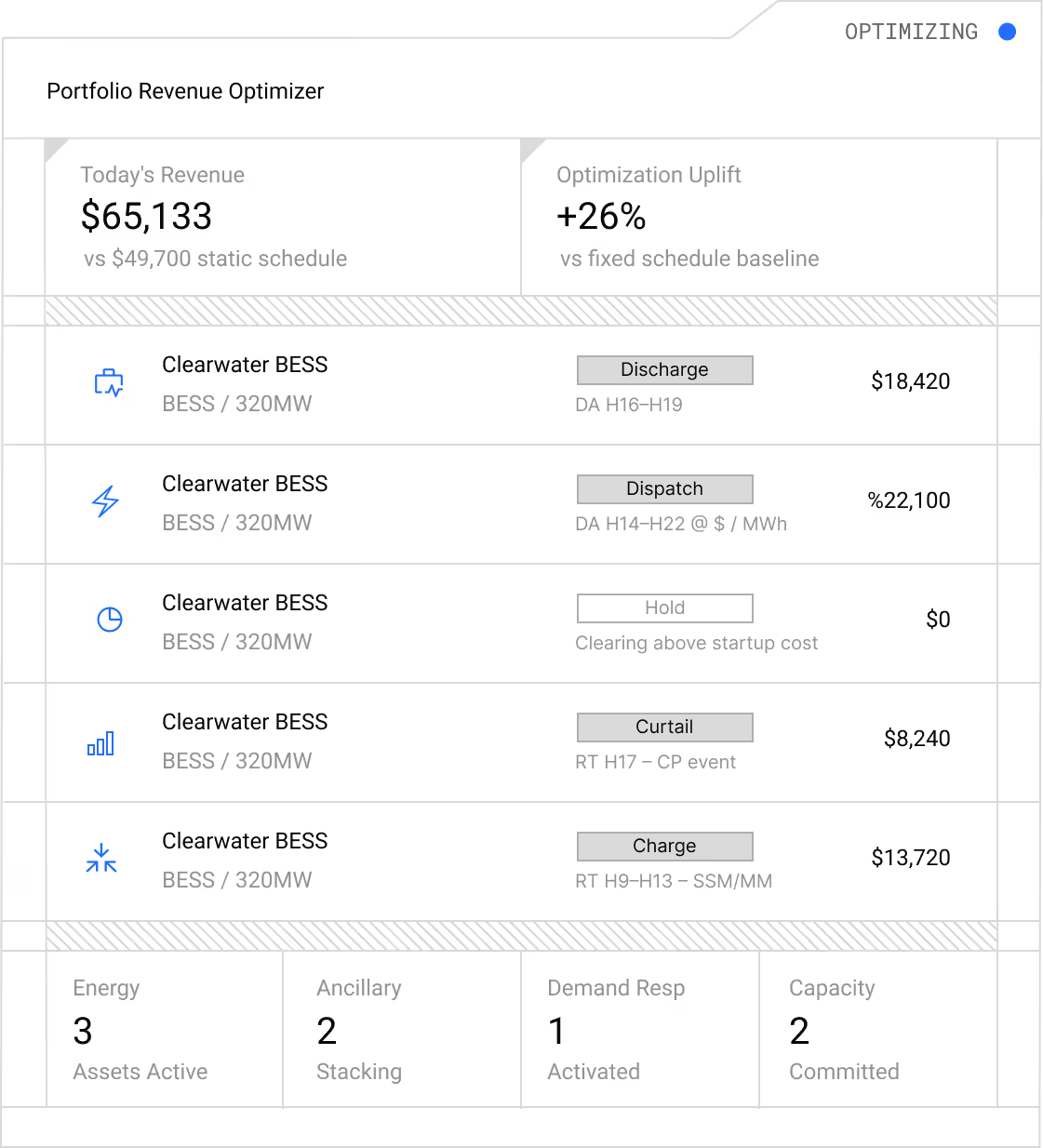
Optimizing Assets in Isolation Leaves Revenue Behind at Every Level
Generation, BESS, gas, and flexible load assets have different cost structures, ramp rates, charge and discharge constraints, and market eligibility. When each is optimized independently, the decisions compound against each other.
Storage charges at the wrong time. Generation dispatches into a window storage should own. Flexible load curtails when the price doesn't justify the operational disruption. Manual coordination absorbs the margin.
Effective portfolio optimization requires a shared view of market conditions, asset availability, and revenue opportunity across the entire fleet — updated with the market.
Storage charged on a fixed overnight window regardless of price
Generation dispatched at historical average rather than forward price
Gas unit committed without justification against startup cost
Flexible load missed a DR activation because signal arrived late


Storage charged in the low-price window, discharged at the peak
Generation dispatched at forecast clearing price, not yesterday’s
Gas held — expected clearing didn’t cover startup cost
Flex load curtailed few hours before the event based on forecast signal
The Revenue Decisions That Define Portfolio Performance
#Charge & Discharge Scheduling
Battery storage value comes from arbitrage: charging when prices are low, discharging when prices are high, and stacking that spread across multiple cycles per day where cycle constraints allow. Arcobi forecasts the price curve and optimizes charge and discharge windows accordingly, factoring in state of charge, degradation limits, and co-location dynamics with generation.

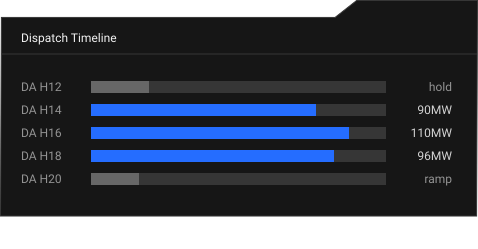
#Dispatch Scheduling
For dispatchable generation, the decision to run, at what output level, and in which market depends on expected clearing prices, fuel costs, and competing assets in the portfolio. Arcobi provides the forward-looking price intelligence that drives dispatch decisions across day-ahead and real-time windows.
#Unit Commitment
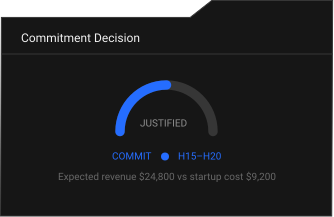
Gas unit commitment involves cost calculations that extend hours or days ahead. Startup and no-load costs require confidence that expected clearing conditions justify the commitment. Arcobi's price and demand forecasts provide that forward visibility so commitment decisions are grounded in where the market is going rather than where it was yesterday.
#Curtailment Timing
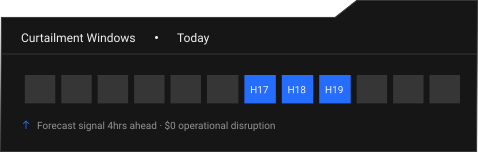
Industrial and commercial loads with operational flexibility generate value through curtailment in high-price windows, demand response activations, and coincident peak periods. Arcobi forecasts those events with enough lead time to act deliberately rather than reactively.
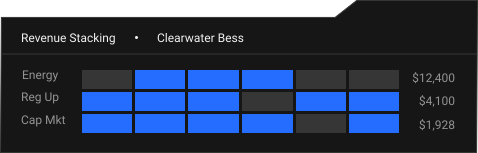
#Revenue Stacking
Energy, capacity, ancillary services, and demand response programs often have complementary participation windows. Portfolio Optimization identifies when assets can stack revenue across multiple markets simultaneously and when trade-offs require prioritization decisions.
From Market Intelligence to Optimized Asset Positions
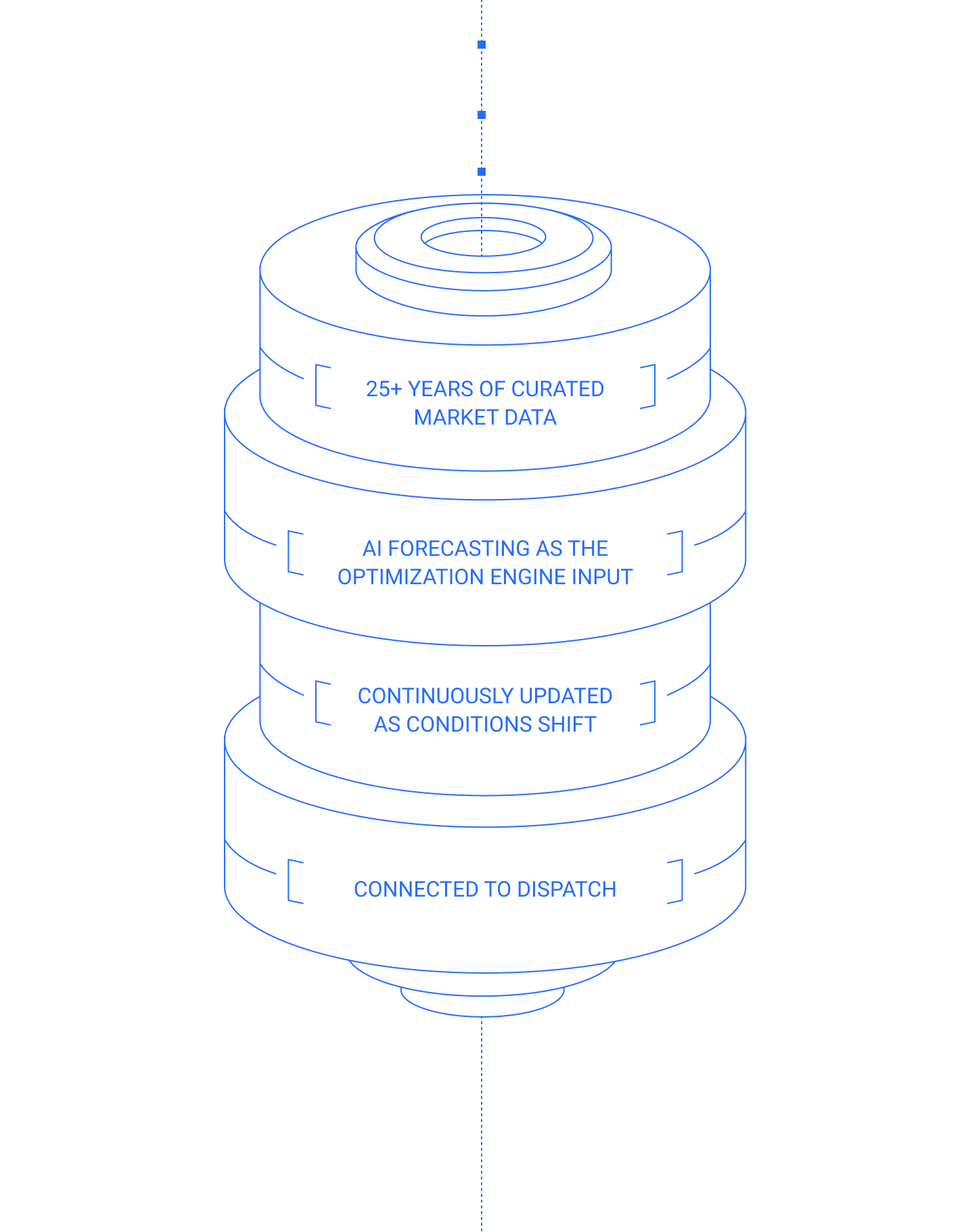
25+ Years of Curated Market Data
DataHub holds 25+ years of curated North American power market data across all major ISOs: wholesale prices, grid metrics, demand data, generation availability, weather drivers, and 330,000+ streams. Every optimization decision builds from this data foundation.
AI Forecasting as the Optimization Engine Input
AI Forecasting produces hour-ahead, day-ahead, and short-range predictions for price, demand, and grid conditions. These forecasts are the direct inputs to every optimization decision: when to dispatch, when to charge, when to curtail, and at what price threshold.
Continuously Updated as Conditions Shift
Optimization is not a static daily schedule. Market conditions change between the day-ahead window and real-time settlement. Arcobi updates asset positions as forecasts and market signals evolve, so portfolio decisions always reflect current conditions.
Connected to Dispatch
When Dispatch is in the stack, optimization recommendations translate directly into automated asset instructions. Portfolio positions are executed, adjusted, and monitored within one platform with human oversight at every step.
What Portfolio Optimization Delivers


BESS Assets

BESS assets charge and discharge on fixed schedules rather than in response to market conditions.

Hour-ahead and day-ahead price forecasts optimized against state of charge, cycle constraints, and co-location dynamics.

Improved arbitrage capture and more disciplined cycle management.
Generation Dispatch
Generation dispatch decisions are made without accurate forward price visibility.
Short-range and day-ahead price forecasting calibrated to the nodes and hubs where the fleet operates.
Higher dispatch revenue and better spread management between day-ahead and real-time settlement.
Gas Facility
Gas facility commitment and startup costs are incurred without sufficient market justification.
Day-ahead price and demand forecasts that reflect whether expected clearing conditions support commitment costs.
Reduced exposure to startup costs incurred against windows that do not clear at the expected price.
Curtailment Decision
Flexible load curtailment decisions miss high-value windows or happen too late to avoid disruption.
Advance price spike, demand response, and coincident peak forecasts with enough lead time to act.
Maximum curtailment value with minimum operational impact.
Revenue Stacking
Revenue stacking across energy, capacity, and ancillary markets is managed manually or not at all.
Portfolio-level visibility into overlapping market windows and revenue stacking opportunities across asset types.
Compounding revenue from simultaneous participation across energy, capacity, and ancillary markets.
Portfolio Revenue
Portfolio revenue is reviewed after the fact with no ability to reposition assets between day-ahead and real-time windows.
Dynamic asset positioning that updates as forecasts and market signals evolve throughout the operating day.
Portfolio performance that reflects where the market actually went, not where it was expected to go at day-ahead submission.
Who is it for
Built for teams that trade, model, and participate in the markets


BESS value is built on arbitrage precision. Operators who charge and discharge based on forecast price curves rather than fixed schedules capture more of the available spread and stack it across more cycles per day.


IPPs managing mixed fleets across generation types and ISOs need optimization decisions that are coherent across the portfolio. When generation and storage positions draw from the same market intelligence, the portfolio performs as a system.


Commercial and industrial organizations with co-located generation, storage, or demand-side flexibility generate compounding value when each asset is positioned against the right market opportunity at the right time.


Renewable-plus-storage projects require optimization decisions that account for generation availability, battery constraints, market conditions, and interconnection rules simultaneously. Arcobi handles that calculation continuously.


Teams responsible for optimizing revenue across multiple assets, locations, and ISOs benefit from a single optimization layer that updates with the market rather than requiring manual coordination across disconnected tools.
What Makes This Different

Optimization Built for Mixed Portfolios
Most optimization tools are designed for a single asset type. Arcobi is built for portfolios where generation, storage, and flexible load need to be optimized as a system — with decisions that reflect the interactions between asset types rather than treating each in isolation.

Proprietary Data Behind Every Forecast
Arcobi's models train on 25+ years of market data the company originates directly, across 330,000+ streams and all major North American ISOs. The signal depth is exclusive to Arcobi and not replicated by tools built on public ISO feeds.
Dynamic, Not Static
Arcobi updates asset positions as market conditions evolve. Optimization decisions made at day-ahead submission are reviewed and adjusted as real-time conditions develop. The portfolio always reflects the most current market intelligence available.

Revenue Stacking Across Multiple Markets
Energy, capacity, ancillary services, and demand response programs are not separate optimization problems. Arcobi evaluates them together, identifying opportunities to stack revenue across markets simultaneously.

Connected to Execution
When Dispatch is in the stack, portfolio optimization recommendations translate directly into automated asset instructions. The gap between the optimization output and the actual asset action closes within one platform.
Compounding Returns Across Every Asset Class
Arcobi customers have collectively identified over $1B in energy cost savings opportunities. Battery storage operators using Arcobi's price forecasting for dispatch optimization have demonstrated additional returns over static scheduling approaches.
$1B+
+25%
28%
Frequently asked questions
What is the accuracy advantage of Arcobi's price forecasting versus internal models?
Internal models are constrained by the data available to build them. Arcobi's models train on 25+ years of proprietary market data, proprietary weather instrumentation through Climavision, and direct market participant behavior signals — a combination that internal teams cannot independently replicate.
How does this integrate with existing energy management systems or SCADA?
Optimization outputs are delivered via dashboards, REST API, and direct integration with Dispatch. Arcobi is designed to complement existing operational infrastructure rather than replace it.
Do we need to use Dispatch to benefit from Portfolio Optimization?
No. Optimization intelligence, forecast inputs, and asset positioning recommendations are available standalone. Dispatch adds automated execution when you are ready to close the loop between the optimization output and the asset action.
How does dynamic optimization work between day-ahead and real-time windows?
Arcobi updates asset positions as forecasts and market signals evolve throughout the operating day. Positions set at day-ahead close are reviewed and adjusted as real-time conditions develop, so asset instructions always reflect current market intelligence.
Does this work for single-asset operators?
Yes. While Portfolio Optimization is designed for multi-asset complexity, the underlying forecasting and dynamic positioning intelligence delivers value for single-asset operators as well.
Which asset types does Portfolio Optimization support?
Generation fleets, battery energy storage systems, gas facilities, and flexible load portfolios across all major North American ISOs. Arcobi is built for organizations managing mixed asset types with multi-market participation.
Every Asset Has More Value in It. We Help You Find It.
Arcobi Portfolio Optimization positions your generation, storage, and flexible load against the market opportunities they are best suited to capture — dynamically, as conditions shift.