
From Forecast Signal to Asset Action, With Every Step Documented
Signal Orchestrator manages the full dispatch workflow. It ingests plant data, applies forecast-driven optimization and guardrails, routes operator approvals, and maintains a complete audit trail — from the first signal to the final controlled action.

Dispatch Automation Without Accountability Is Risk at Scale
Automating dispatch without audit trails, approval routing, and configurable guardrails creates compliance exposure and operational blind spots. Speed matters in dispatch — but not at the cost of control. Signal Orchestrator supports phased adoption. Start with human-in-the-loop oversight at every step and expand automation as operational confidence builds.
Signal Orchestrator is built on the premise that automation and accountability are not in tension. Every automated action is bounded by rules you define. Every decision is logged. Every step requiring operator judgment gets routed for confirmation before execution.

Where Dispatch Automation Typically Falls Short
What Better Market Intelligence Delivers
Asset signals arrive from multiple sources with different formats and protocols
Plant data, site feeds, and grid signals need normalization before they can drive decisions. Latency in that process delays execution and erodes capture rate.
Optimization without guardrails creates operational risk
Automated dispatch acting outside of asset constraints, operating limits, or regulatory requirements is a compliance liability. Guardrails need to be enforceable, not advisory.
Human approval requirements create bottlenecks without routing intelligence
Systems that either bypass approvals or route everything through the same queue fail both requirements. Fast automated execution where appropriate; human oversight where required.
Audit trails are often incomplete or reconstructed after the fact
Compliance and regulatory requirements demand real-time documentation, not records assembled retroactively. Every action needs a log entry at the moment it occurs.
Forecast intelligence and execution run in separate systems
When the optimization layer does not have direct access to forecast outputs, it acts on stale inputs. The gap between intelligence and action is where capture rate erodes.
Multi-asset dispatch creates conflicting instructions across the portfolio
Without a unified dispatch workflow layer, generation, BESS, flexible load, and gas assets compete rather than coordinate — missing position or creating operational conflicts.
The Full Dispatch Workflow, End to End
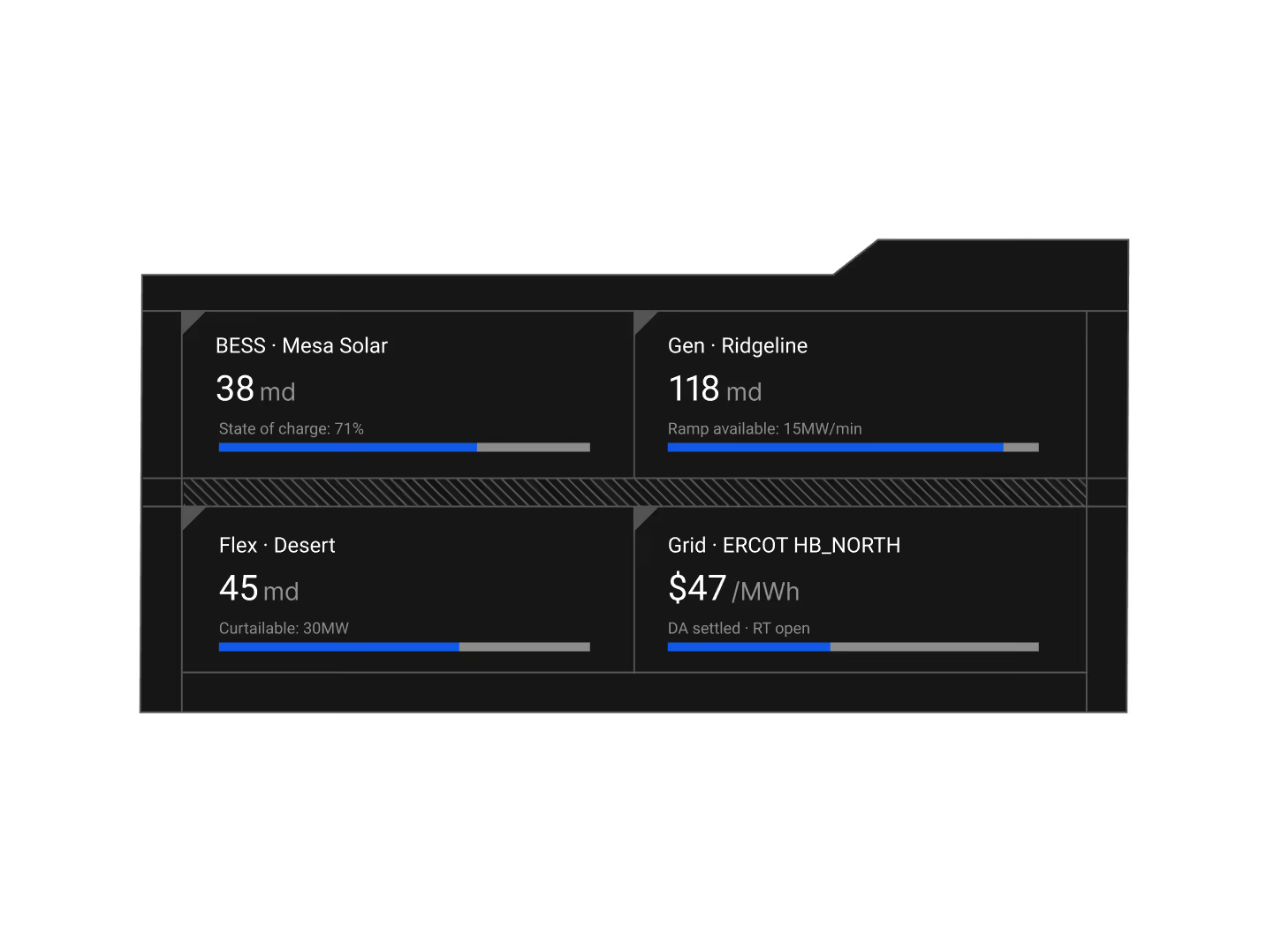


Signal Ingestion
Signal Orchestrator ingests plant signals, site data, and generation feeds from your assets through standard integration protocols. Inputs are normalized, validated, and made available to the optimization layer in real time — without manual preprocessing or latency.
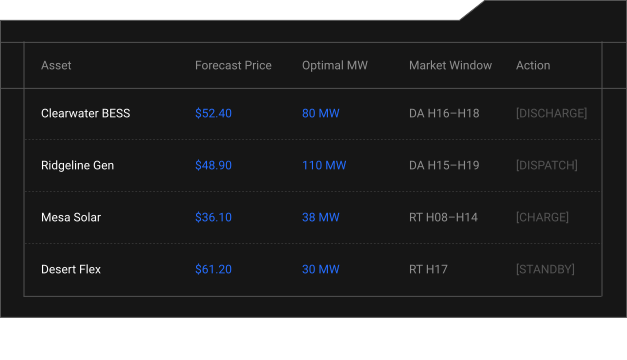
Optimization
Arcobi AI Forecasts — covering price, demand, ancillary service conditions, and grid state — feed directly into the optimization engine. Signal Orchestrator applies these alongside your operational parameters to identify the highest-value dispatch decision at each interval.
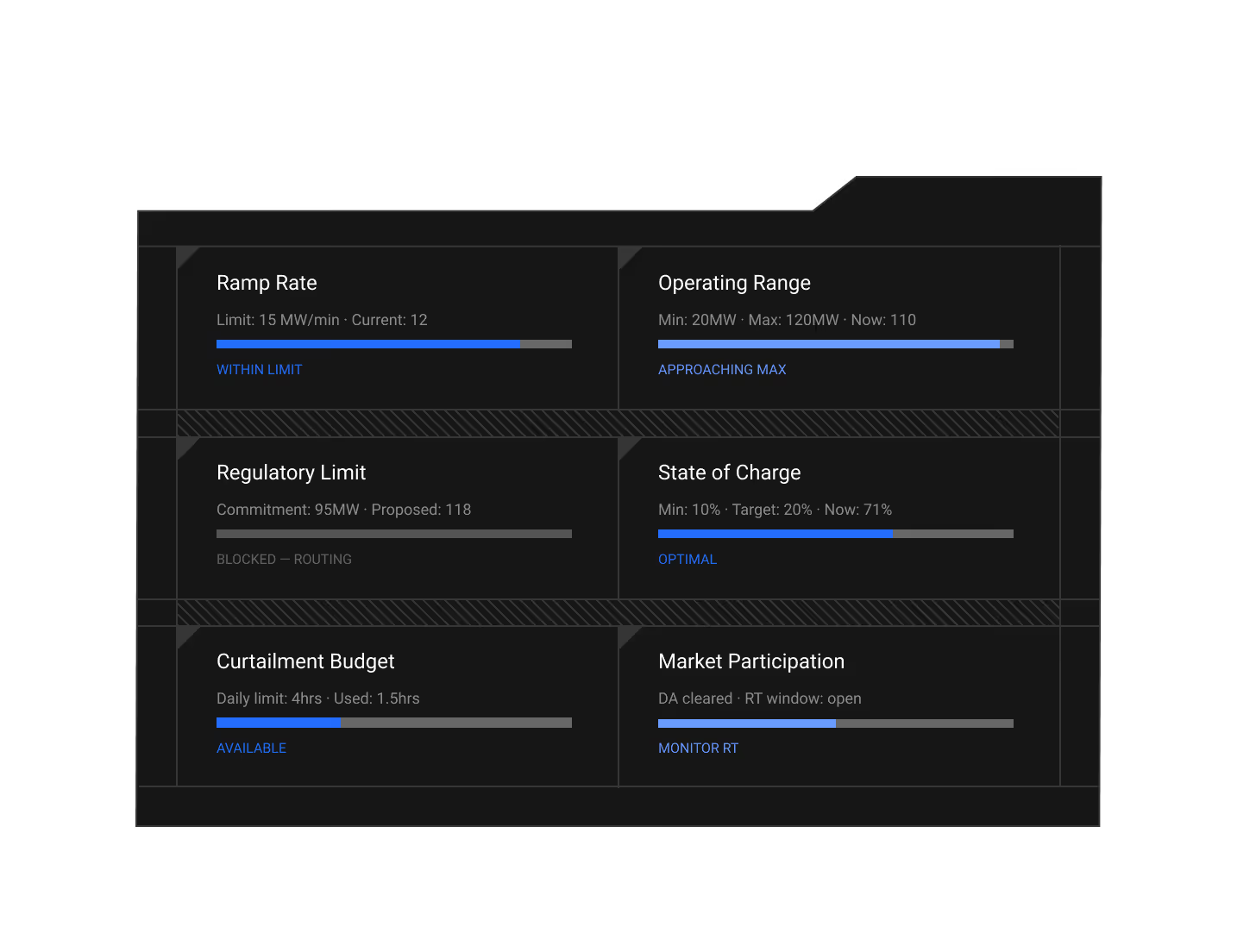
Guardrails
Operational boundaries are configured per asset class: operating limits, ramp constraints, regulatory requirements, and participation rules. Signal Orchestrator enforces these at every step. Automated actions do not execute outside of defined parameters — instructions that breach guardrails are blocked and routed for operator review. Automated actions do not execute outside of defined parameters — instructions that breach guardrails are blocked and routed for operator review.
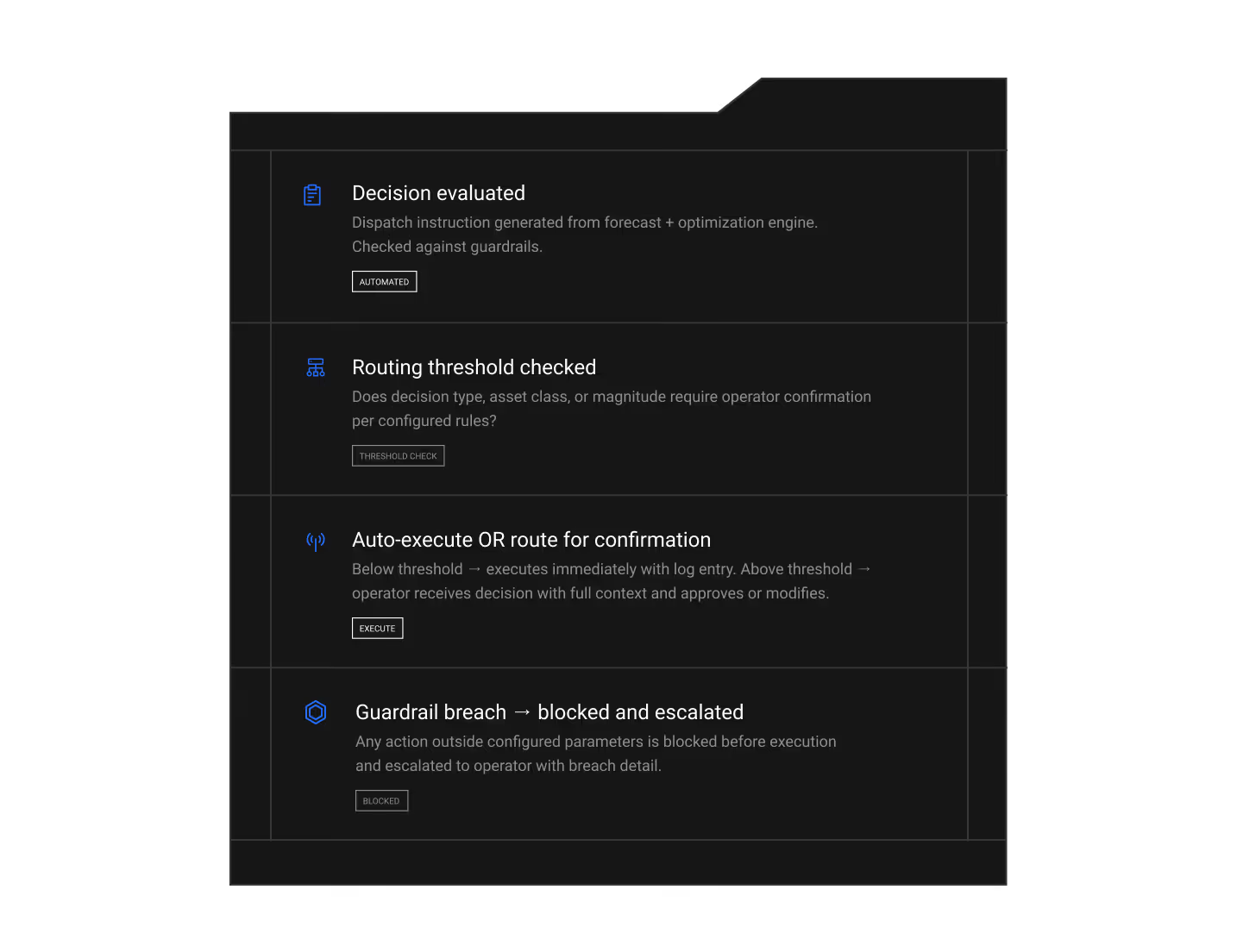
Approval Routing
Decisions that require human confirmation are routed to the appropriate operator before execution. Routing logic is configurable based on decision type, asset class, and approval threshold. The operations center acts on the instructions Signal Orchestrator surfaces, with full context at each decision point.
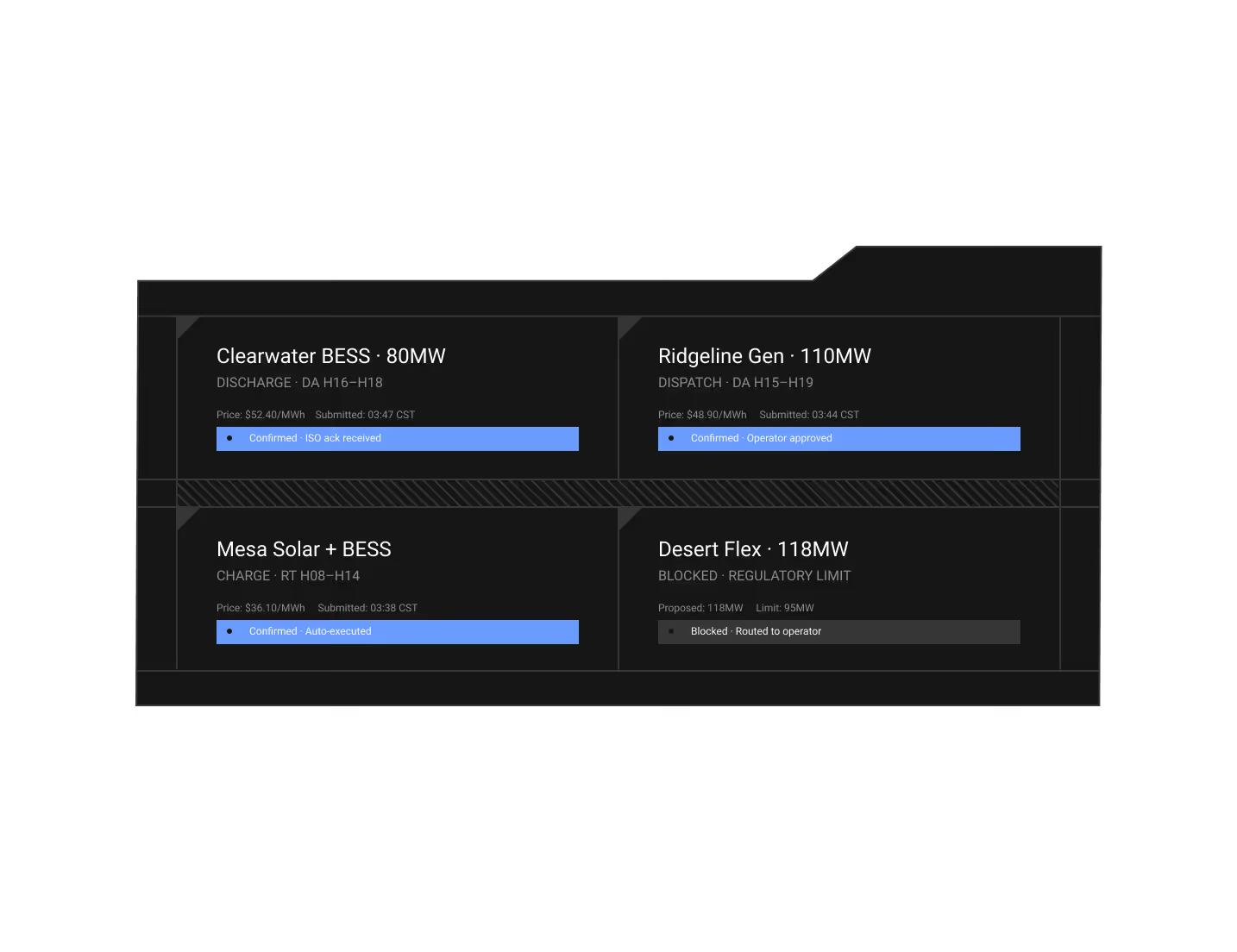
Execution
Dispatch instructions are issued to assets as confirmed, controlled actions. Signal Orchestrator tracks each action through to confirmation, logging the outcome alongside the forecast inputs and approval record that generated it.

Audit Trail
Every signal ingested, every optimization decision, every approval routed, and every action executed is recorded with a complete, timestamped audit trail. Access is governed by least-privilege controls. Compliance documentation is available immediately — not reconstructed after the fact.
What Signal Orchestrator Handles for You
Plant Optimization

Plant and site signals need normalization before they can drive dispatch decisions.

Ingests and normalizes signals from multiple asset sources in real time.

Clean, structured inputs reach the optimization layer without latency.
Optimization
Optimization needs to honor asset-specific operating constraints.
Configurable guardrails enforce limits per asset class at every decision point.
Automated dispatch stays within operational and regulatory parameters.
Operator Confirmation
Some decisions require operator confirmation; others do not.
Approval routing logic distinguishes which decisions require human confirmation and routes accordingly.
Reduced operational complexity and fewer gaps between strategy and execution.
Compliance
Compliance requires a complete record of every dispatch action.
Real-time audit trail captures every signal, decision, approval, and action as it occurs.
Full compliance documentation available immediately, not reconstructed after the fact.
Forecast Intelligence
Forecast intelligence and execution run on separate timelines.
Forecast outputs feed directly into the optimization engine without a manual handoff.
Dispatch decisions reflect current market intelligence, not the last available snapshot.
BESS and Generation Assets
BESS and generation assets need coordinated dispatch without conflicting instructions.
Multi-asset dispatch coordinated within a single workflow layer, honoring each asset's constraints.
Portfolios dispatch cohesively without operational conflicts.
Configurable Guardrails, Not Black-Box Automation


Signal Orchestrator does not sit downstream of AI Forecasting — it runs on it. Forecast outputs feed the optimization engine directly. No manual translation between what the model predicts and what gets dispatched.


Documentation of every action is built into the workflow architecture. Compliance is not a reporting function appended after execution; it is native to how Signal Orchestrator operates.


Automation does not mean removing judgment from dispatch. Signal Orchestrator routes the decisions that require human confirmation and executes the ones that do not, based on rules your team sets and can adjust over time.


Operational boundaries, approval thresholds, and dispatch parameters are defined by your team. Signal Orchestrator works within those boundaries. The system does not operate without them.
Configurable Guardrails, Not Black-Box Automation

Forecast-Connected from the Ground Up
Signal Orchestrator does not sit downstream of AI Forecasting — it runs on it. Forecast outputs feed the optimization engine directly. No manual translation between what the model predicts and what gets dispatched.

Audit Trail as a Core Feature, Not an Add-On
Documentation of every action is built into the workflow architecture. Compliance is not a reporting function appended after execution; it is native to how Signal Orchestrator operates.

Human Oversight at Every Configurable Point
Automation does not mean removing judgment from dispatch. Signal Orchestrator routes the decisions that require human confirmation and executes the ones that do not, based on rules your team sets and can adjust over time.

You Define the Constraints
Operational boundaries, approval thresholds, and dispatch parameters are defined by your team. Signal Orchestrator works within those boundaries. The system does not operate without them.
What Controlled Automation Delivers
Across the Arcobi customer base, more than $1B in energy cost savings opportunities have been identified. For organizations running automated dispatch, the compounding benefit is capture rate — the percentage of available market value that converts to actual revenue, continuously, without manual intervention.
Reduced dispatch overhead. Compliance documentation that satisfies regulatory requirements without added administrative burden. And market participation that runs at the speed of conditions — not the speed of your operations team's shift schedule.
$1B+
100%
24/7
Frequently asked questions
Does Signal Orchestrator work without the Power Operations Center?
Signal Orchestrator can operate with configurable levels of human oversight. The Power Operations Center provides expert market operators who work within the Signal Orchestrator workflow. Organizations configure the approval routing and automation levels that match their operational model.
Can Signal Orchestrator handle multiple asset types simultaneously?
Yes. Generation, BESS, flexible load, and gas facilities participate through the same workflow layer, with asset-specific guardrails and constraints applied independently to each.
How does the audit trail work?
Every event in the dispatch workflow — signal ingestion, optimization decision, approval routing, and executed action — is logged in real time with a timestamped record. Access to the audit trail is governed by least-privilege controls.
What happens if a dispatch instruction falls outside of defined guardrails?
The instruction is blocked and routed for operator review. Signal Orchestrator does not execute actions outside of configured parameters — and every blocked instruction is logged with the reason for the block.
How are guardrails configured?
Operational boundaries are defined per asset class during onboarding and can be updated as operating conditions or regulatory requirements change. Guardrail configuration does not require software development.
How does Signal Orchestrator connect to existing plant systems?
Signal Orchestrator ingests plant signals and site data through standard integration protocols. The integration is designed for minimal disruption to existing operational infrastructure.
Controlled Dispatch, at Market Speed
Arcobi turns uncertainty into opportunity for everyone who touches a wire. Signal Orchestrator is the system that makes execution as reliable as the intelligence behind it.