
Market-driven control for load, DR, industrial process, and generation assets
Translate forecasts and program obligations into time-bound, asset-aware actions executed through your existing control stack.
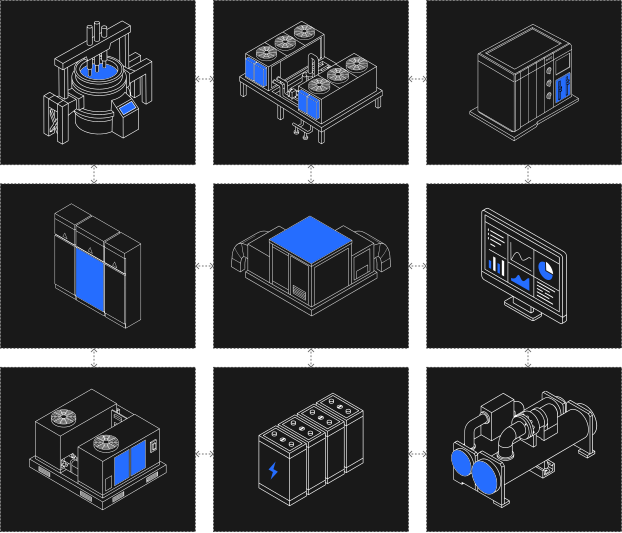
Why This Exists
If you run a facility, you already have the pieces: market data, forecasts, BMS/SCADA/PLC, and a DR portal. The problem is the pieces do not talk to each other in a consistent, enforceable way.
Market Data
Sits in one system.


Forecast Models
Run in another.
Asset Constraints
Lives inside BMS/SCADA
DR Management
Through yet another interface.
Result
Delays, conflicting actions, and missed windows.
How Signal Orchestrator Works
Arcus treats energy operations as a stack
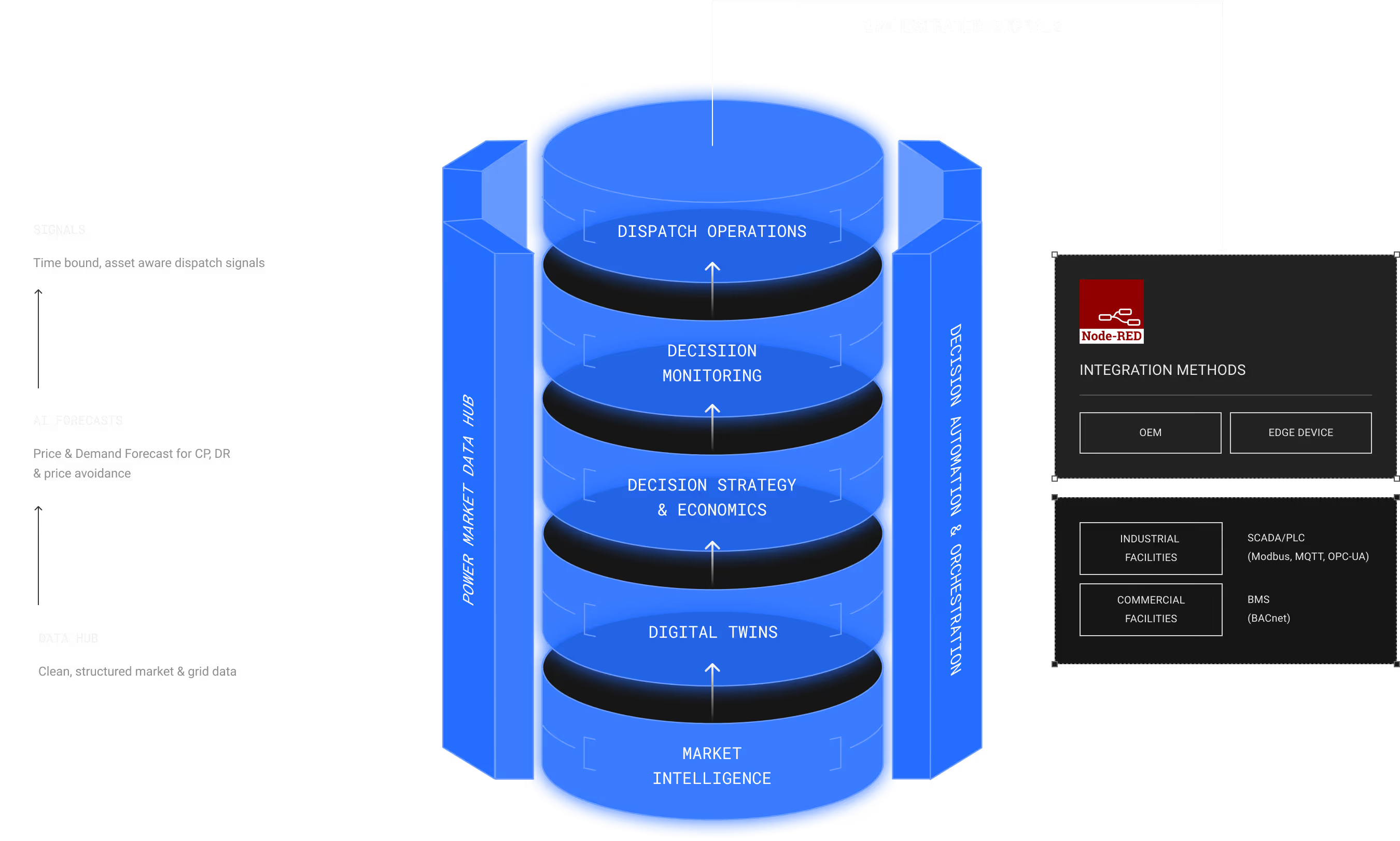

DataHub
Clean, structured grid and market data foundation
AI Forecasts
CP and price trajectories plus risk windows by zone/node
Signals
Translate forecasts into time-bound instructions aligned to your strategy and program rules
Signal Orchestrator
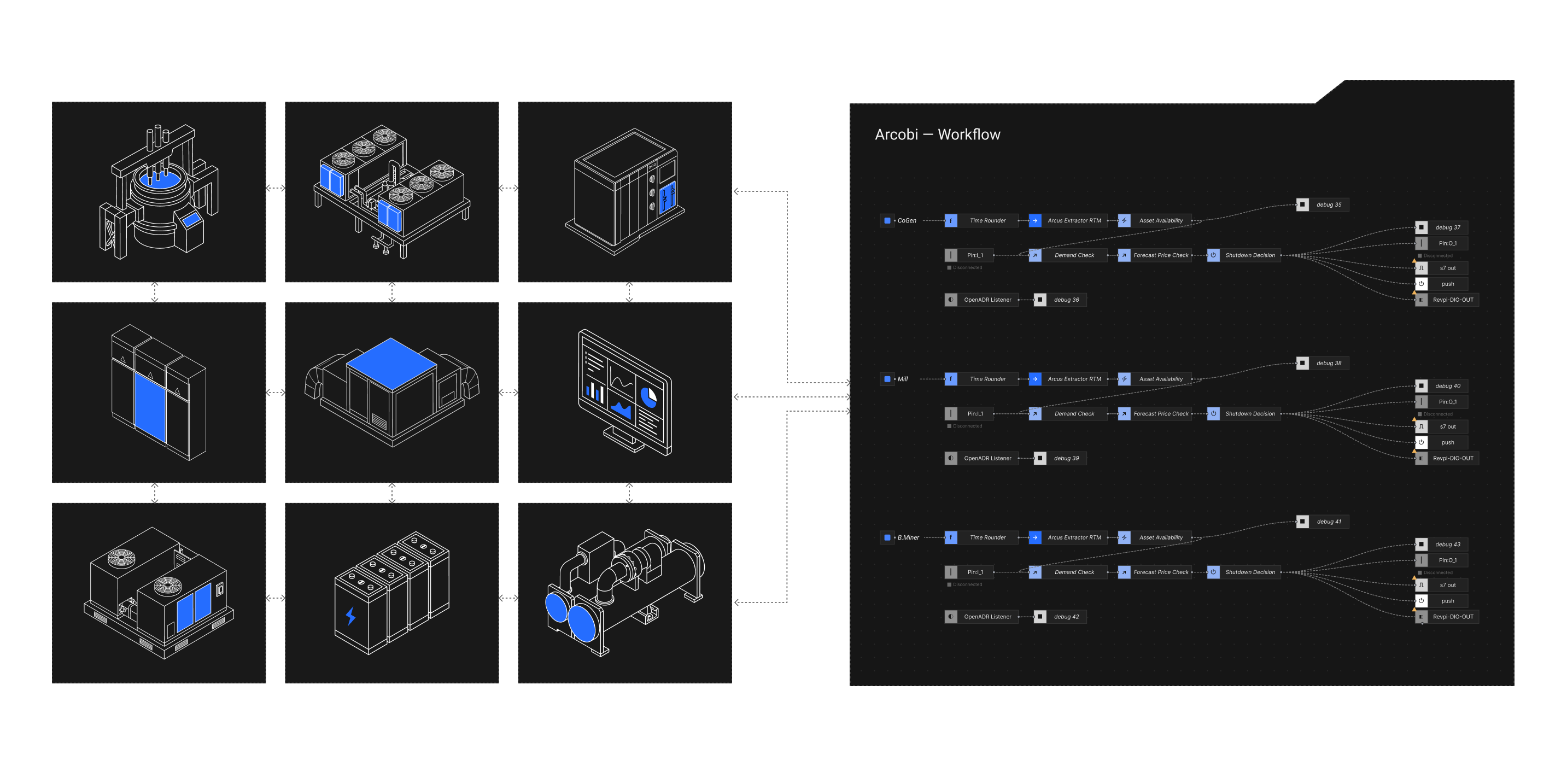
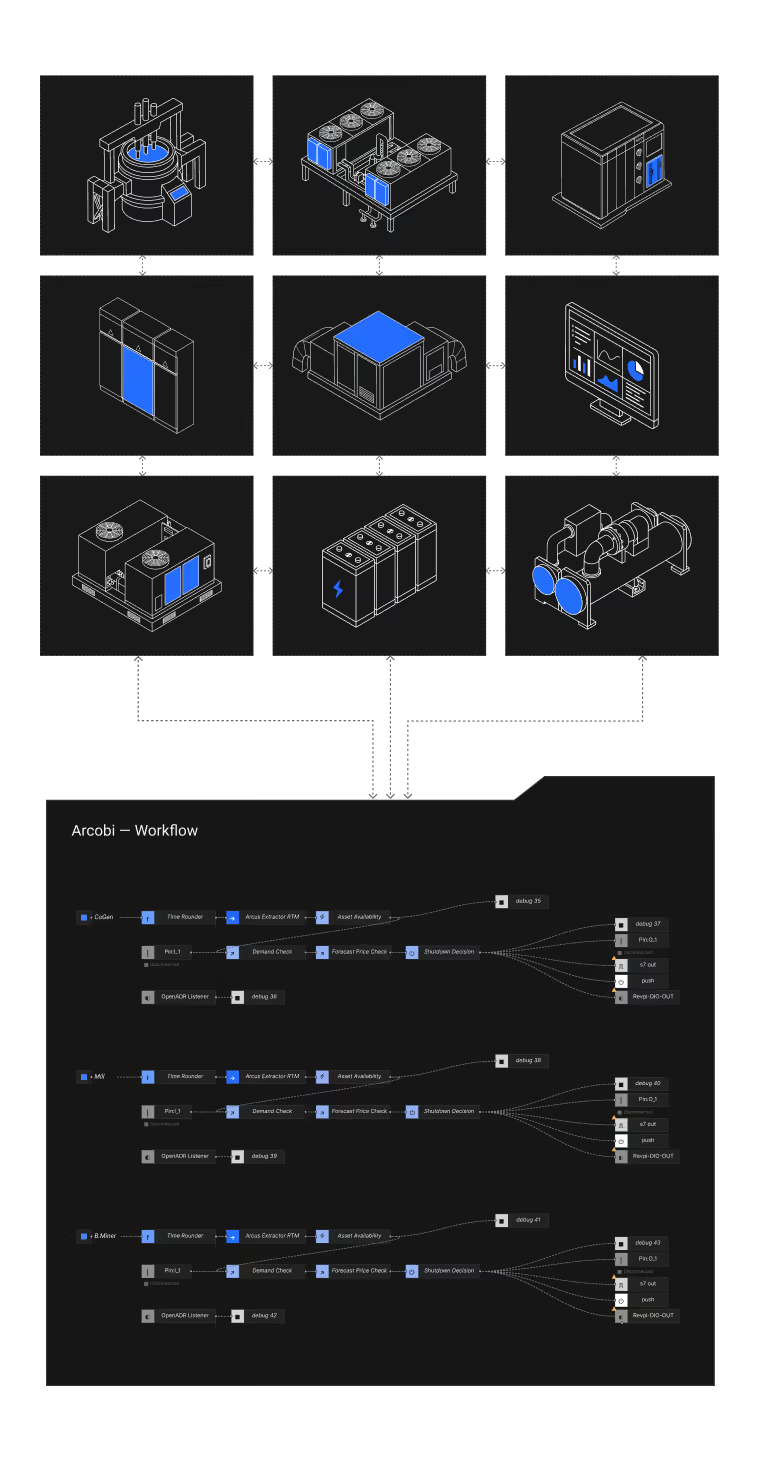
Executes those instructions on real equipment via Node-RED logic flows
Assets
BMS, PLC/SCADA, OEM edge devices, batteries/ CHP/generators
Outcomes You Should Expect
Fewer missed DR events, fewer penalties
Enforce DR commitments with a coherent instruction set that prioritizes obligations.
Lower peak exposure without operational chaos
Protect CP and transmission peak windows with controlled, pre-planned actions tied to constraints.
Less over-curtailment
Stop cutting too much on low-impact days and not enough on the critical ones by using time-bound signals and asset-aware logic.
Consistent execution across sites and assets
Same market condition, same policy, same response—even off-hours.
One Coherent Signal, Not Competing Commands
Many sites are simultaneously trying to do DR, manage CP exposure, and avoid high price windows. Each goal can compete for the same equipment.
Signal Orchestrator reconciles objectives into a unified signal: DR obligations can take priority, CP windows can be protected, and price response fills the gaps
This prevents conflicting commands and makes performance predictable.
Built for Your Industry


DR is managed like a calendar event, CP is managed like a guess, and price response is managed like a manual "best effort."
Shed or shift load in uneconomic price windows
Adjust HVAC and site load based on CP and price signals
Coordinate site-wide load reduction so assets do not fight each other
Enforce DR commitments and availability rules without manual checklists
Log every curtailment action with timestamps for program compliance and audit
Every DR obligation met, every CP window responded to, every site action logged — without someone coordinating it by hand.

The price signal arrives at 9 AM. By the time it clears the energy manager, gets approved by operations, and turns into a setpoint instruction, the CP window has already closed. Nobody missed a step. The process just was not built for market speed.
Translate real-time price and capacity signals into process-level setpoint changes
Sequence load reductions across production lines without triggering unplanned shutdowns
Coordinate chillers, compressors, and compressed air systems during price or DR events
Set production-aware curtailment floors that operations can commit to in advance
Execute CP avoidance actions automatically, with operator override always available
Market events execute at the process level, curtailment limits are set in advance, and operations never has to manage an emergency response mid-shift.

Dispatch decisions happen across three screens, two spreadsheets, and a phone call. By the time the instruction reaches the asset, the price window is 15 minutes old. Market prices move in 5-minute intervals. Operator decision cycles run closer to 30. That gap is where margin gets left behind.
Execute DA and RT dispatch instructions based on current market position
Manage BESS state of charge against forecast price curves, not just today's schedule
Enforce ramp constraints, operating limits, and interoperability rules at the asset level
Route dispatch approvals with a full audit trail for NERC, ISO, and internal compliance
Reconcile actual dispatch against program commitments for accurate settlement
Every dispatch is market-optimized, constraint-enforced, approval-routed, and reconciled against commitments — start to finish, without manual handoffs.
Integration That Fits Your IT/OT Reality
Signal Orchestrator runs inside your environment and connects through both IT-facing and OT-facing methods. You control how market signals interact with local systems.
For OEMs: If you’re an OEM or you run standardized equipment across fleets, this also opens a clean path to embed orchestration through native OT protocols, without rebuilding your control layer.
IT-Facing Options
HTTP(S) / REST APIs
Webhooks (event-driven updates)
MQTT / AMQP (message buses)
Database connectors and queues
OT-Facing Options
Modbus TCP/RTU
BACnet IP / MS/TP (BMS integration)
OPC-UA (modern SCADA)
Custom industrial protocols
What a Pilot Looks Like
Choose one site or one controllable asset group
Define priorities: DR first, CP protection, price avoidance, or a specific stack order
Map constraints: safety limits, production setpoints, min run times, ramp limits
Implement Node-RED logic + protocol integration
Run in “observe” mode first (signals and recommended actions), then “execute” mode with controlled permissions
Observe Mode: View signals and recommended actions without executing.
Execute Mode: Controlled permissions for live asset control.
Know What's Coming Before It Costs You
If you already have forecasts and DR enrollment, you're sitting on value that depends on execution timing. Signal Orchestrator gives you a coherent, program-aware instruction set and executes it through your existing controls.